
“I’m not a salesperson, even though that’s on my title. I walk with people through their process. Everybody is different, and every property is different. This one really required some thinking…”
— Bobbilyn, Bonner Realty Agent
A Property With No Obvious Buyer
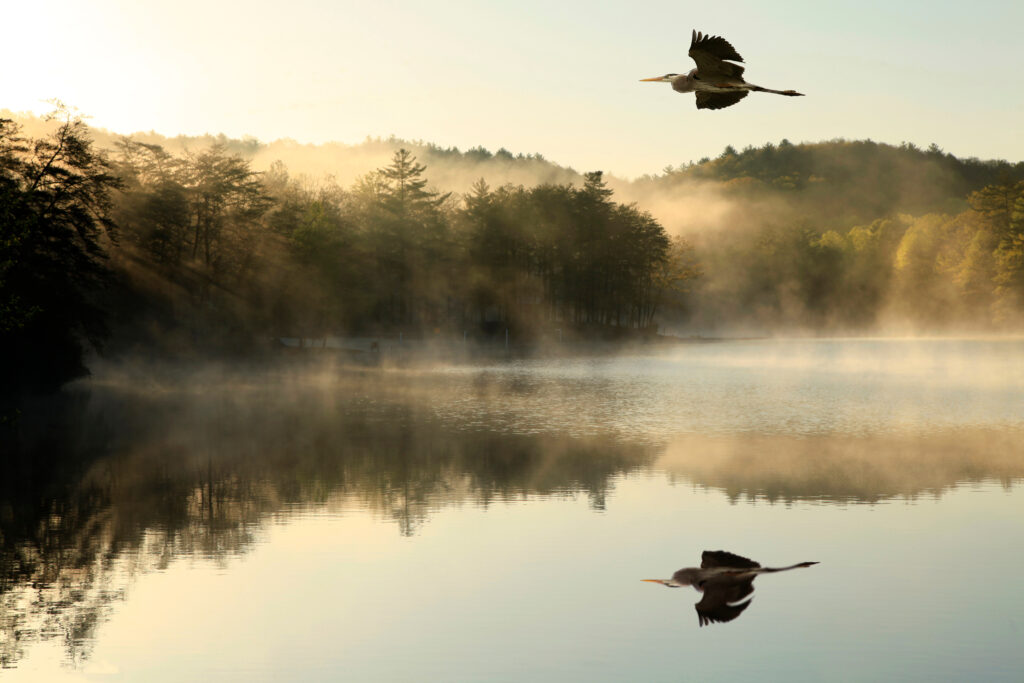
When four siblings came to Bobbilyn to sell their late parents’ estate, they carried more than paperwork. Their father had spent a lifetime building something rare: an 85-acre working fish hatchery, complete with a network of ponds, a sophisticated water management system, and a thriving ecosystem. After his passing, the hatchery closed, but the estate retained its picturesque beauty: pink and white water lilies floated across the water’s surface, ducks and blue herons coexisted in harmony, and the surrounding wetlands provided a home for dear and other wildlife, season after season. It was, by any measure, extraordinary.
It was also nearly impossible to sell.
The parcel had been subdivided from the larger estate (the house and additional land sold relatively quickly), but this 85-acre aquatic stretch was classified as non-buildable. No developer would touch it. The chances of a standard listing reaching the right buyer were slim. Viewings took hours to complete. And, for the selling family, releasing it into the wrong hands didn’t sit well. This was their father’s life’s work – his legacy.
Art Imitates Life
Bobbilyn spent months working through the problem – diligently putting leads out – before a moment of inspiration struck. Walking past a framed wildlife print of ducks mid-flight, she decided to call Ducks Unlimited in Tennessee.
This set off a chain of events no one could have anticipated. The Tennessee office connected her to their real estate division in Michigan. Their team flew down to PA. Biologists tested the estate’s water quality and found that the blue herons weren’t just stopping by. They had established an active rookery – a permanent nesting colony – on the property. The land deserved protection.
From there, Ducks Unlimited worked alongside other conservation organizations to secure grant funding – including the Western Pennsylvania Conservancy, the very first call Bobbilyn had made. They had been uncertain then, but the scientific evidence convinced them to circle back and support the preservation bid.
It took nearly a year, but the pieces came together. The land was purchased and set aside for three years for monitoring and stabilization purposes, before being transferred to the state. It is now preserved in perpetuity as a protected hunting and wildlife habitat.
A Legacy of Care
The four siblings never dreamed this outcome was possible. Maybe they had hoped, quietly, that something meaningful could come out of the sale – perhaps a fellow nature lover would buy it and treat their inheritance well – but this was something else.
More than a sale, they received confirmation that their father’s life’s work was not in vain. The ponds, the birds, the land he had cared for with his own hands – all of that would be enjoyed by generations of Pennsylvanians to come.
Bobbilyn still sees members of the family in the community today. They are, by all accounts, overjoyed — not just with the outcome, but with how it unfolded: through a process that honored what mattered to them, even when they didn’t know how to ask for it.
What This Means for You
Whether you’re a seller navigating a situation that doesn’t fit the usual mold, or a buyer looking for a home that meets a very specific set of needs, the Bonner Realty approach is the same: listen carefully, think creatively, and keep going until the right answer appears. Sometimes ducks are even involved.
Every property is different. Every client is different. And every situation, no matter how complex, has a solution waiting to be found.
FAQs
Can you sell land that is not buildable?
Even if land cannot be developed for homes, commercial buildings, or other construction, it can still have significant value for the right buyers.
Non-buildable land often includes wetlands, forests, ponds, and other natural features that make it attractive to conservation organizations, environmental groups, and recreational buyers. By highlighting its ecological significance, wildlife habitats, or potential for preservation, sellers can market the property to groups that prioritize long-term stewardship over development. With the right approach, land that seems impossible to sell can find a buyer who appreciates its unique attributes and ensures its protection for the future.
Who buys non-buildable land?
Non-buildable land is typically purchased by organizations or individuals interested in conservation, environmental preservation, recreation, or resource development.
Conservation groups, government agencies, and nonprofits often acquire land with important ecosystems, wetlands, or wildlife habitats, while neighboring landowners or recreational buyers may see value in preserving open space or hunting areas. In some cases, individuals or companies interested in mining or extracting natural resources may also find non-buildable land appealing. Understanding who the ideal buyer is can turn a challenging property into a successful sale.
How do you sell a property with environmental restrictions?
Selling land with environmental restrictions requires a strategic approach that emphasizes its unique attributes rather than development potential.
Real estate professionals often work with conservation experts, environmental consultants, and specialized buyers to communicate the land’s ecological importance. Highlighting protected habitats, water features, or other natural assets can make the property appealing to conservation organizations or government programs. By positioning the property as a rare opportunity to preserve and protect the environment, sellers can successfully attract buyers who see long-term value beyond traditional construction.